


Time:2025-11-08 Views:1 source:News
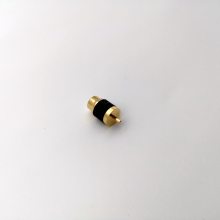
USB 3.1 Gen2 Pogo Pins are high-speed spring-loaded connectors designed to support the USB 3.1 Gen2 standard—delivering data transfer speeds of up to 10Gbps (twice the speed of USB 3.1 Gen1) while maintaining the compact form factor and reliable contact of traditional Pogo Pins. Unlike standard USB connectors (which use fixed pins and require precise alignment), USB 3.1 Gen2 Pogo Pins use spring-loaded contacts to accommodate minor misalignment (up to 0.5mm), making them ideal for devices with frequent mating cycles or space constraints, such as laptops, external hard drives, VR headsets, and industrial IoT (IIoT) devices.
The technical capabilities of USB 3.1 Gen2 Pogo Pins are defined by compliance with the USB Implementers Forum (USB-IF) USB 3.1 Gen2 specification, which includes: 1) High-Speed Signal Integrity: To achieve 10Gbps transmission, Pogo Pins must maintain strict impedance control (90Ω ±15%) and minimize signal loss (insertion loss <3dB at 5GHz) and crosstalk (near-end crosstalk < -25dB at 5GHz). This requires precision manufacturing—including gold-plated contacts (to reduce contact resistance and signal degradation), controlled-impedance PCB traces, and shielded housings (to block electromagnetic interference, EMI). 2) Power Delivery Support: USB 3.1 Gen2 Pogo Pins can deliver up to 100W of power (via USB Power Delivery, USB PD) when paired with compatible controllers—enabling them to charge laptops (e.g., 65W for ultrabooks) or power external devices like 4K monitors, in addition to transmitting data. 3) Compact Form Factor: With pin pitches as small as 0.6mm (compared to 2.54mm for standard USB-A connectors), USB 3.1 Gen2 Pogo Pins fit into thin devices (e.g., 2-in-1 laptops, wireless chargers) where traditional USB connectors would be too bulky.
Key design features that enable these capabilities include: 1) Multi-Contact Design: USB 3.1 Gen2 Pogo Pins typically have 4-8 contacts—including dedicated pins for data (SuperSpeed+ differential pairs), power (VBUS and GND), and USB PD communication (CC pins). The spring-loaded mechanism ensures each contact maintains consistent pressure (20-50g per pin) to avoid signal dropouts. 2) EMI Shielding: Metal housings or conductive gaskets surrounding the Pogo Pins block external EMI (e.g., from nearby wireless antennas) and prevent the Pogo Pins’ high-speed signals from interfering with other components. 3) Durability: USB 3.1 Gen2 Pogo Pins support 10,000+ mating cycles (per USB-IF requirements), making them suitable for devices that require frequent connection/disconnection, such as laptop docking stations or portable SSDs.
A manufacturer of high-speed external SSDs reported that using USB 3.1 Gen2 Pogo Pins reduced connector size by 30% compared to USB-C connectors, while still delivering 10Gbps speeds—enabling a slimmer, more portable device design. For end-users, USB 3.1 Gen2 Pogo Pins offer the best of both worlds: the speed of USB 3.1 Gen2 and the flexibility of Pogo Pins, making them ideal for high-performance, space-constrained devices. As data transfer demands continue to grow (e.g., 8K video editing, large file transfers), USB 3.1 Gen2 Pogo Pins are becoming an increasingly important component in modern electronics.
Read recommendations:
Magnetic PogoPin factory customization


159-2067-7287 Mr. Wan

0769-86006029

No. 5, Zhenrong Road, Wusha, Chang'an Town, Dongguan City
 Whatapp
CopyRight © 2024 Dongguan Yongtan New Energy Co., Ltd. All Rights Reserved


 CN
CN
 Home >