


Time:2025-12-16 Views:1 source:News
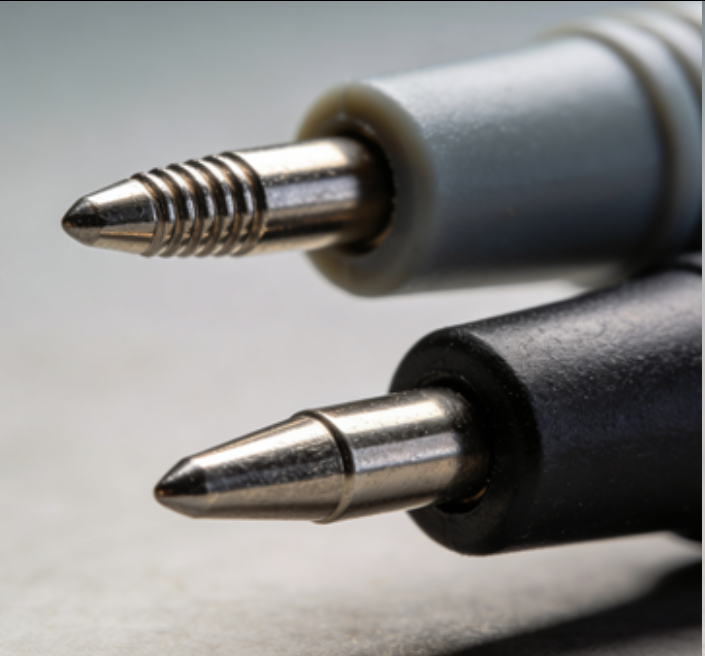
Power test probes are specialized diagnostic tools designed to measure, verify, and troubleshoot electrical power parameters in circuits, equipment, or power systems—critical for ensuring safe and efficient operation in industries like electronics repair, automotive maintenance, and industrial engineering. These probes typically feature a sharp, conductive tip (made of brass or nickel-plated steel) to pierce insulation or make contact with terminals, a insulated handle (heat-resistant plastic or rubber) for user safety, and a cable that connects to a measuring device (multimeter, oscilloscope, or power analyzer).
Their core functions include measuring voltage (AC/DC, from 1V to 1000V+), current (via inline adapters), and checking continuity (to detect open circuits). Advanced models integrate features like built-in fuses (to protect against overcurrent), LED indicators (to signal live circuits), and banana plugs (for quick connection to test equipment). For example, Fluke’s TL175 TwistGuard power test probes have insulated tips that twist to expose conductive points, reducing the risk of accidental shocks, and are rated for 1000V AC/DC and 10A current—suitable for industrial power systems.
Power test probes excel in scenarios like automotive electrical testing (checking battery voltage, alternator output), household circuit troubleshooting (identifying dead outlets), and electronics repair (verifying power supply to components). Safety is a top priority: probes meet international standards (e.g., IEC 61010) for insulation resistance and voltage ratings, and insulated handles prevent user contact with live parts. For technicians and engineers, these probes provide accurate, real-time power data, enabling fast diagnosis of issues like voltage drops, short circuits, or power surges—minimizing downtime and ensuring electrical safety.
Read recommendations:
Anti electromagnetic interference magnetic connector for industrial automation equipment


159-2067-7287 Mr. Wan

0769-86006029

No. 5, Zhenrong Road, Wusha, Chang'an Town, Dongguan City
 Whatapp
CopyRight © 2024 Dongguan Yongtan New Energy Co., Ltd. All Rights Reserved


 CN
CN
 Home >