


Time:2025-11-20 Views:1 source:News
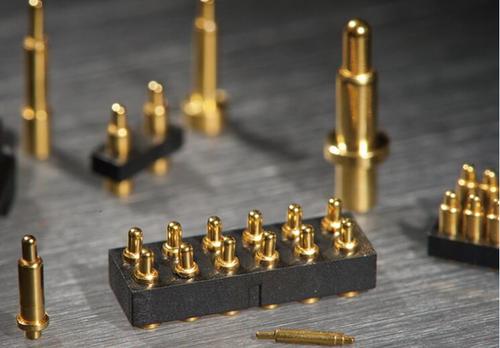
A Pogopin probe test socket (also called a "Pogopin test fixture") is a specialized testing device designed to hold and electrically connect electronic components (e.g., integrated circuits, ICs; sensors; connectors) to test equipment during functional or performance testing. Unlike generic test sockets, it uses Pogopin (spring-loaded pin) technology to create temporary but reliable connections between the component’s pins/terminals and the test circuit, prioritizing easy component insertion/removal, consistent contact performance, and protection of delicate components—making it ideal for testing scenarios like IC validation, sensor calibration, and connector performance verification in industries such as electronics, automotive, and medical devices.
The core components of a Pogopin probe test socket include Pogopin contact pins, component positioning structure, insulating housing, and test circuit interface. Pogopin contact pins are tailored to the component’s terminal layout: for ICs with SMD (surface-mount device) packages (e.g., QFP, BGA), the pins are arranged in an array matching the IC’s pad positions; for connectors with pin headers, the pins are aligned in a single or double row. Each pin has a spring-loaded design (spring force: 8g to 30g) that allows it to retract when the component is inserted, ensuring uniform contact pressure across all terminals—preventing poor contact due to terminal height differences. The pins are made of high-conductivity materials (e.g., beryllium copper) with gold plating (thickness: 0.5μm to 3μm) to minimize contact resistance (≤30mΩ) and ensure stable signal transmission, even for high-frequency signals (up to 10GHz in some models).
The component positioning structure is critical for accuracy: it uses guide rails, locating pins, or suction cups to align the component with the Pogopin pins, ensuring positional accuracy up to ±0.02mm. For fragile components (e.g., thin-film sensors, microchips), the positioning structure applies gentle clamping force (≤5N) to avoid component damage during insertion. The insulating housing, made of heat-resistant plastics (e.g., PEEK, LCP) or ceramic, isolates the Pogopin pins from each other to prevent short circuits and withstand test temperatures (ranging from -40°C to 125°C for automotive-grade sockets). The test circuit interface (e.g., PCB edge connector, USB port) connects the socket to test equipment (e.g., oscilloscopes, signal generators) for data collection and analysis.
Key advantages of Pogopin probe test sockets include user-friendly operation, versatility, and long-term stability. User-friendly operation is enabled by the easy insertion/removal design: components can be inserted manually or by automated equipment (e.g., pick-and-place machines) without requiring complex alignment tools, reducing testing time. Versatility is reflected in its customizable design—manufacturers can adjust the Pogopin pin layout, housing size, and interface type to match specific components (e.g., a socket for a 16-pin QFP IC vs. a 48-pin BGA IC). Long-term stability is ensured by the durable Pogopin pins (service life: 50,000 to 500,000 insertion cycles) and wear-resistant housing materials, making the socket suitable for high-volume production testing.
In practical use, Pogopin probe test sockets support various testing scenarios. In IC design validation, engineers use a custom socket to test a new microcontroller’s functional performance—inserting the IC into the socket, connecting it to an ATE system, and verifying parameters like clock speed and I/O functionality. In sensor manufacturing, a socket with precision Pogopin pins tests a pressure sensor’s output signal under different pressure conditions, ensuring calibration accuracy. In automotive connector testing, a socket simulates the connector’s mating with a vehicle’s wiring harness, testing electrical continuity and resistance to vibration. For businesses involved in component testing, Pogopin probe test sockets provide a reliable, efficient solution to ensure product quality.
Read recommendations:
Low cost mass production of magnetic connectors


159-2067-7287 Mr. Wan

0769-86006029

No. 5, Zhenrong Road, Wusha, Chang'an Town, Dongguan City
 Whatapp
CopyRight © 2024 Dongguan Yongtan New Energy Co., Ltd. All Rights Reserved


 CN
CN
 Home >