


Time:2025-11-14 Views:1 source:News
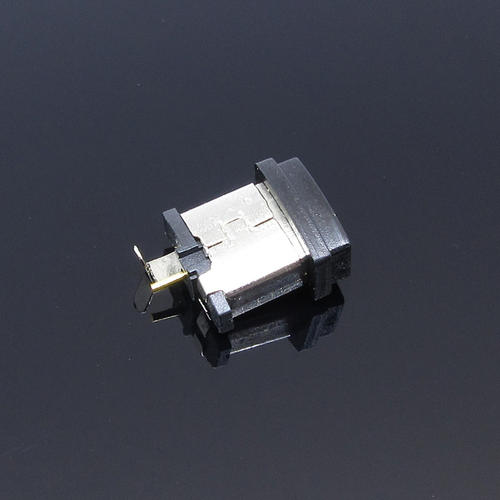
Pogo Pin laboratory test probes are high-precision electrical contact tools designed for use in research laboratories, academic institutions, and advanced testing facilities—where accuracy, repeatability, and compatibility with specialized test setups are paramount. Unlike manufacturing or field-test probes, these probes are engineered to support a wide range of scientific experiments and detailed analysis, such as material science testing (e.g., measuring the electrical conductivity of new alloys), semiconductor device characterization (e.g., testing transistor performance), and nanotechnology research (e.g., probing microscale electronic components). Their core features include ultra-low contact resistance, high measurement resolution, and compatibility with sensitive laboratory equipment.
The technical design of laboratory test probes prioritizes precision and versatility. They feature a microscale structure: probe tips with diameters as small as 5 micrometers (for nanotechnology applications) to access microscale or nanoscale components, ultra-fine spring forces (5 to 20 grams) to avoid damaging delicate samples (e.g., thin-film materials or microchips), and highly conductive materials (e.g., gold-plated beryllium copper or pure silver) to achieve ultra-low contact resistance (less than 10 milliohms)—critical for accurate measurement of weak electrical signals (e.g., microamps or millivolts). Many models include a “positioning system” (e.g., micrometer-adjustable mounts or robotic arms) that allows for precise alignment of the probe tip with the sample—essential for testing microscale features where even a 1-micrometer misalignment can invalidate results.
In laboratory workflows, these probes enable cutting-edge research and analysis. For semiconductor characterization, high-frequency laboratory probes (with bandwidths up to 110 GHz) measure the electrical performance of transistors, diodes, and integrated circuits (ICs) at the nanoscale—helping researchers optimize device design for faster speeds or lower power consumption. In material science, specialized probes with temperature-controlled tips (ranging from -270°C to 500°C) test the electrical properties of materials under extreme thermal conditions, such as superconductors at cryogenic temperatures or high-temperature alloys for aerospace applications. They also integrate with advanced laboratory equipment, such as scanning electron microscopes (SEMs), atomic force microscopes (AFMs), or precision source-measure units (SMUs), enabling simultaneous imaging and electrical testing of samples—providing a comprehensive understanding of a material’s or device’s behavior.
Practical benefits for researchers include enhanced data accuracy and experimental flexibility. The ultra-low contact resistance and precise positioning ensure that measurements are free from artifacts caused by poor contact or misalignment, allowing researchers to draw reliable conclusions from their experiments. The compatibility with specialized equipment and customizable designs (e.g., custom tip shapes for unique sample geometries) enables researchers to tailor the probe to their specific experiment—whether testing a single nanowire or characterizing a large-area thin film. Additionally, many laboratory probes are designed for long-term stability, maintaining consistent performance over months of continuous use—critical for long-duration experiments, such as monitoring the degradation of materials over time. For the scientific community, Pogo Pin laboratory test probes are indispensable tools that push the boundaries of what is possible in electrical testing and research, enabling breakthroughs in technology and materials science.
Read recommendations:


159-2067-7287 Mr. Wan

0769-86006029

No. 5, Zhenrong Road, Wusha, Chang'an Town, Dongguan City
 Whatapp
CopyRight © 2024 Dongguan Yongtan New Energy Co., Ltd. All Rights Reserved


 CN
CN
 Home >