


Time:2025-11-22 Views:1 source:News
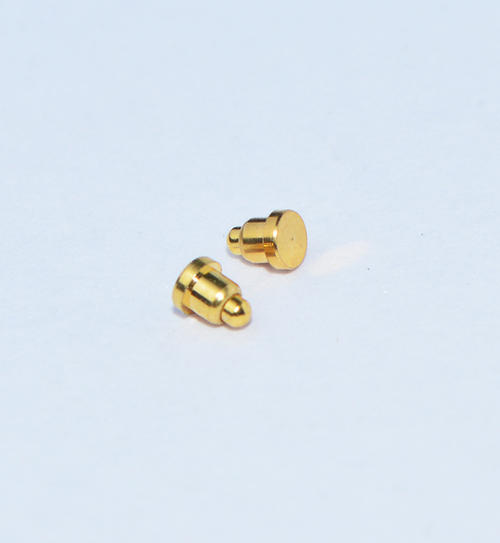
Pogo Pin factory audit requirements are a set of criteria used by buyers or third-party auditors to evaluate the quality management, production capabilities, compliance, and reliability of Pogo Pin manufacturing facilities. Unlike general factory audits, Pogo Pin-specific audits focus on processes unique to spring-loaded contact production (e.g., plating, spring assembly, precision machining) and ensure factories meet industry standards, customer specifications, and regulatory requirements—critical for buyers to select reliable suppliers, mitigate supply chain risks, and ensure consistent Pogo Pin quality.
The core of Pogo Pin factory audit requirements covers five key areas: 1) Quality Management System (QMS): Factories must have a certified QMS (e.g., ISO 9001 for general quality, IATF 16949 for automotive, ISO 13485 for medical) with documented procedures for incoming material inspection (IQC), in-process quality control (IPQC), and final product testing (FQC). Auditors verify if Pogo Pin materials (e.g., brass, gold plating) are inspected for ROHS compliance and dimensional accuracy (using tools like calipers, micrometers, and optical comparators). They also check if defect rates are tracked (e.g., using control charts) and if corrective actions are taken for non-conformities (e.g., high plating thickness variation). 2) Production Process Control: Auditors evaluate Pogo Pin manufacturing steps—precision machining (of pin bodies), spring assembly (ensuring spring force meets specifications), plating (verifying thickness, adhesion, and ROHS compliance), and assembly (checking pin alignment). Key checks include: use of CNC machines for consistent machining (tolerance ±0.01mm), spring force testing (with force gauges to ensure 50-500g force range), and plating thickness testing (using X-ray fluorescence spectrometers to confirm Au ≥0.5μm, Ni ≥3μm). 3) Facility and Equipment: Factories must have dedicated production areas (separated from storage to avoid contamination), cleanrooms for plating (class 100,000 or higher to prevent dust on pins), and calibrated equipment (with calibration certificates from accredited labs, valid within 12 months). Auditors check if anti-static measures are in place (as detailed earlier) and if equipment maintenance logs are up-to-date (e.g., CNC machine servicing every 6 months). 4) Compliance and Documentation: Factories must provide documentation for ROHS compliance (material test reports), labor compliance (no child labor, fair wages per local laws), and environmental compliance (wastewater treatment for plating processes, meeting local EPA standards). Auditors verify if batch records are maintained (tracking each Pogo Pin batch from material to shipment) for traceability. 5) Customer Service and Continuous Improvement: Auditors evaluate if the factory has a dedicated customer service team to handle complaints, if on-time delivery rates are ≥95%, and if continuous improvement programs are in place (e.g., lean manufacturing to reduce waste, employee training on new plating technologies).
Application scenarios drive audit rigor. For automotive buyers, IATF 16949 certification is mandatory, and audits focus on process stability (e.g., consistent spring force for EV battery Pogo Pins) and traceability (batch records for 10+ years). For medical device buyers, ISO 13485 certification is required, and audits include checks for sterile packaging (if Pogo Pins are used in medical devices) and risk management procedures. For consumer electronics buyers, audits focus on high-volume production capabilities (e.g., monthly capacity ≥1 million Pogo Pins) and anti-static controls (to prevent ESD damage).
When conducting a Pogo Pin factory audit, key factors include audit scope (full QMS vs. specific processes), auditor qualification (third-party auditors accredited by bodies like ISO), and follow-up actions (corrective action plans for non-conformities, with deadlines). Buyers should also conduct periodic re-audits (annually or bi-annually) to ensure factories maintain standards. With factory audits directly impacting supplier selection and product quality, thorough evaluation of Pogo Pin factories is essential for a reliable supply chain.
Read recommendations:
National standard AC charging socket


159-2067-7287 Mr. Wan

0769-86006029

No. 5, Zhenrong Road, Wusha, Chang'an Town, Dongguan City
 Whatapp
CopyRight © 2024 Dongguan Yongtan New Energy Co., Ltd. All Rights Reserved


 CN
CN
 Home >