


Time:2025-11-13 Views:1 source:News
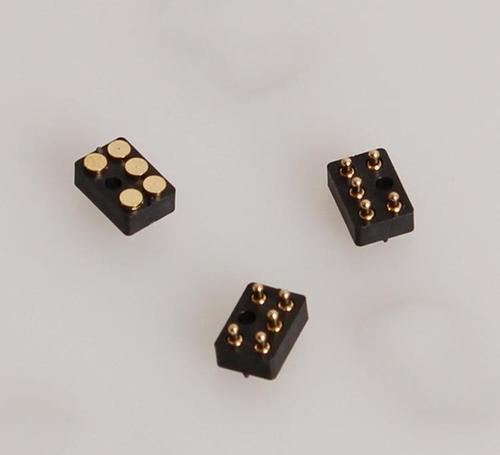
Pogo Pin electrical safety test probes are critical components designed to verify the compliance of electronic devices with global electrical safety standards (e.g., IEC 60950, UL 60950, or CSA C22.2 No. 60950) by testing for potential hazards such as leakage current, insulation resistance, ground continuity, and dielectric strength. Unlike general-purpose test probes, these probes are engineered to withstand high voltages (up to 10,000 V AC/DC) and high currents (up to 30 A), while ensuring operator safety and accurate measurement of safety-related parameters. Their primary applications include safety testing of household appliances, industrial equipment, medical devices, and consumer electronics before market release.
The technical design of electrical safety test probes focuses on high-voltage insulation, current-carrying capacity, and safety compliance. They feature a two-layer insulation structure: a primary insulation layer (made of high-temperature-resistant materials like PEEK or Teflon) that prevents voltage leakage between the probe pin and the outer casing, and a secondary protective layer (often reinforced with fiberglass) that provides additional protection against insulation failure. The probe pins are made of high-conductivity, high-strength materials like copper-tungsten alloy (for high-current tests) or gold-plated brass (for low-leakage current tests), ensuring stable contact even at extreme voltages. Many models include a “safety interlock” feature that disables the test if the probe is not properly connected to the device under test (DUT), preventing accidental electric shock to operators.
In safety testing workflows, these probes perform specialized functions tailored to different safety standards. For insulation resistance testing (measuring the resistance between live parts and the device’s chassis), high-voltage Pogo Pin probes apply a DC voltage (typically 500 V or 1000 V) and measure the leakage current—values above a threshold (e.g., 100 ohms) indicate insulation failure. For ground continuity testing (verifying the effectiveness of the device’s ground connection), low-resistance, high-current probes pass a test current (e.g., 10 A) through the ground path and measure the voltage drop—ensuring the resistance is below 0.1 ohms, as required by most safety standards. For dielectric strength testing (testing insulation against breakdown), probes apply a high AC or DC voltage (e.g., 3000 V AC for 1 minute) between live parts and ground, monitoring for arcing or current leakage that would indicate a safety hazard.
Practical advantages of these probes include compliance assurance and operator safety. Their design meets international safety certifications (e.g., VDE, CSA, or UL), ensuring that test results are recognized by regulatory bodies worldwide—critical for devices sold in global markets. The high-voltage insulation and safety interlocks protect operators from electric shock, a key concern when working with high voltages. Additionally, their compatibility with automated safety test systems allows for consistent, repeatable testing—reducing human error in manual testing and ensuring that every device meets safety standards. For manufacturers and test labs, Pogo Pin electrical safety test probes are non-negotiable tools that ensure electronic devices are safe for consumer use, avoiding costly recalls and protecting brand reputation.
Read recommendations:
Magnetic connector for the medical industry
Quick - Connect Reliable contact force magnetic connector for Frequent Use


159-2067-7287 Mr. Wan

0769-86006029

No. 5, Zhenrong Road, Wusha, Chang'an Town, Dongguan City
 Whatapp
CopyRight © 2024 Dongguan Yongtan New Energy Co., Ltd. All Rights Reserved


 CN
CN
 Home >