


Time:2026-01-05 Views:1 source:News
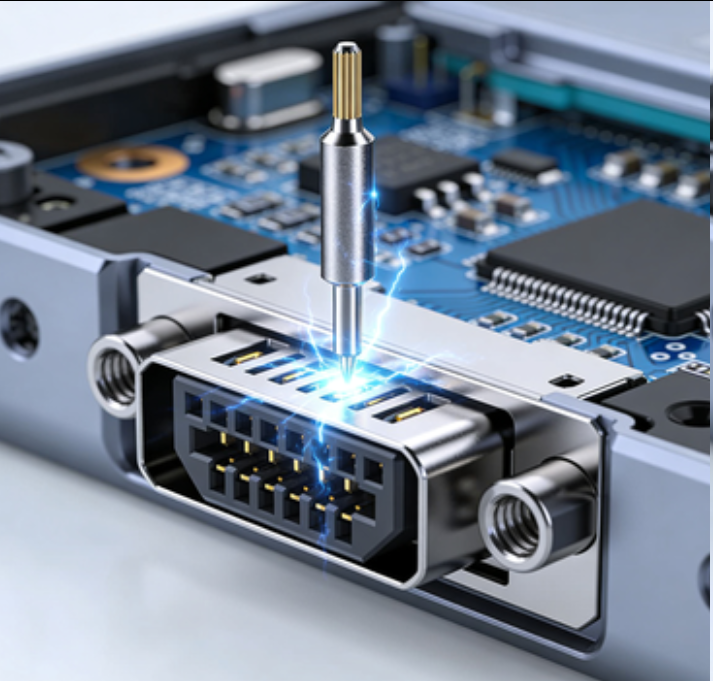
The oxidation resistance of pogopin probes is a critical property that significantly affects their long - term performance and reliability. Oxidation occurs when the metal surfaces of the probes react with oxygen in the air, forming oxide layers that can increase contact resistance, degrade electrical conductivity, and ultimately lead to connection failures. Understanding and enhancing the oxidation resistance of pogopin probes is crucial for ensuring their stable operation in different environments.
The main factors influencing the oxidation resistance of pogopin probes are the material composition and surface treatment. The base materials used for pogopin probes, such as copper, stainless steel, or alloys, have different inherent oxidation resistances. Copper, for example, is prone to oxidation, forming a greenish - brown copper oxide layer when exposed to air. To address this, alloying elements can be added to the base material to improve its oxidation resistance. Stainless steel, with its chromium content, forms a thin, protective passive oxide layer that inhibits further oxidation, providing better resistance compared to pure copper.
Surface treatment plays a vital role in enhancing the oxidation resistance of pogopin probes. Common surface treatments include plating, coating, and passivation. Plating involves depositing a thin layer of a more oxidation - resistant metal, such as gold, nickel, or tin, onto the surface of the probe. Gold plating, in particular, is highly effective as gold is extremely inert and does not react easily with oxygen, providing excellent long - term protection against oxidation. Nickel plating can also offer good oxidation resistance and is often used as an underlayer for gold plating to improve adhesion. Coatings, such as organic polymer coatings, can create a physical barrier between the metal surface and the air, preventing oxygen from reaching the metal and reducing the oxidation rate. Passivation treatments, which involve chemical reactions to form a stable oxide layer on the surface, can also enhance the probe's resistance to oxidation.
The operating environment has a significant impact on the oxidation process of pogopin probes. In humid environments, the presence of moisture can accelerate oxidation, as water can act as a catalyst in the chemical reaction between the metal and oxygen. In corrosive atmospheres, such as those containing sulfur - containing gases or salts, the oxidation resistance of the probes can be severely challenged. Therefore, when selecting pogopin probes for specific applications, it is essential to consider the environmental conditions and choose probes with appropriate material compositions and surface treatments to ensure sufficient oxidation resistance. By improving the oxidation resistance of pogopin probes, manufacturers can extend their service life, reduce maintenance costs, and enhance the overall reliability of electronic devices that rely on these probes for electrical connections.
Read recommendations:
automation equipment Magnetic connector
Double-head gun extension cable from American standard to European standard
High speed signal Magnetic PogoPin
Pogo Pin Connector for electronic products
High temperature resistant Magnetic PogoPin for Aerospace Industry


159-2067-7287 Mr. Wan

0769-86006029

No. 5, Zhenrong Road, Wusha, Chang'an Town, Dongguan City
 Whatapp
CopyRight © 2024 Dongguan Yongtan New Energy Co., Ltd. All Rights Reserved


 CN
CN
 Home >