


Time:2025-12-27 Views:1 source:News
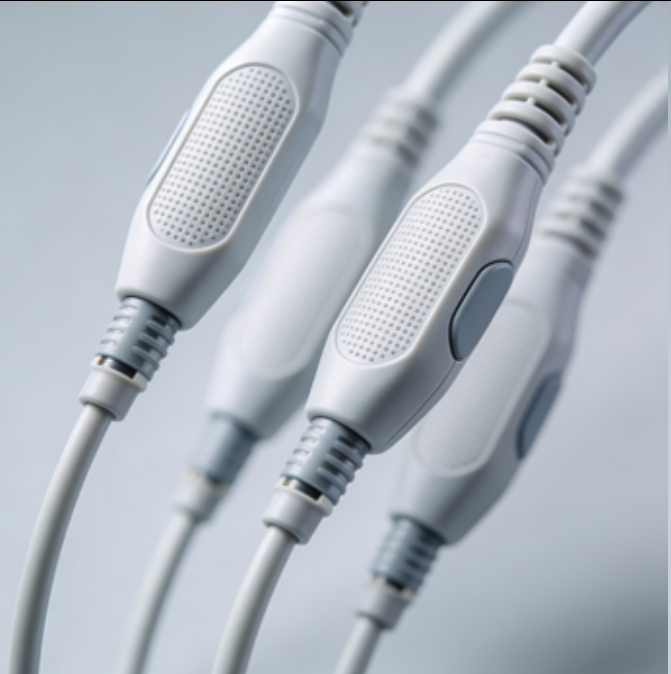
Medical Monitoring Device Probes are specialized, clinically validated sensing components used in healthcare settings (hospitals, clinics, or home care) to collect accurate physiological data for diagnosis, treatment, and patient monitoring. Unlike consumer wearable probes (which prioritize convenience and general health tracking), these probes meet strict medical standards (e.g., FDA approval or CE marking) for accuracy, reliability, and patient safety—supporting critical clinical decisions like adjusting medication dosages or detecting life-threatening conditions.
The design of medical monitoring probes is focused on clinical-grade accuracy and safety: common types include invasive and non-invasive variants, tailored to specific medical needs. For example, a temperature probe used in hospitals might be a non-invasive tympanic (ear) probe with a precision thermistor that measures core body temperature within ±0.1°C, or an invasive esophageal probe for continuous monitoring of critically ill patients. Blood pressure probes (integrated into sphygmomanometers) use inflatable cuffs with pressure sensors to measure systolic and diastolic pressure, while arterial line probes (invasive) provide real-time, continuous blood pressure data for patients in intensive care units (ICUs).
Other critical medical probes include ECG (electrocardiogram) probes (with conductive electrodes to capture heart electrical activity for arrhythmia detection), pulse oximetry probes (using optical sensors to measure blood oxygen saturation in patients with respiratory conditions), and EEG (electroencephalogram) probes (detecting brain electrical activity to diagnose epilepsy or monitor anesthesia depth). These probes are constructed with biocompatible materials (e.g., medical-grade plastic or latex-free rubbers) to avoid allergic reactions, and many are disposable to prevent cross-contamination between patients.
Key features that distinguish medical monitoring probes from consumer alternatives include high precision (meeting clinical accuracy standards, such as ±2% error for blood oxygen measurements), signal stability (minimizing noise to ensure reliable data during long-term monitoring), and compliance with medical regulations (e.g., ISO 13485 for medical device quality management). They also integrate with medical monitoring systems (e.g., patient monitors in ICUs) to transmit data in real time, enabling healthcare providers to respond quickly to changes in a patient’s condition.
In clinical practice, these probes are indispensable: they help monitor patients during surgery (e.g., tracking heart rate and blood pressure), manage chronic conditions (e.g., measuring glucose levels in diabetic patients), and detect emergencies (e.g., low oxygen levels in patients with pneumonia). For healthcare providers, medical monitoring device probes deliver the accurate, reliable data needed to provide high-quality care, while for patients, they ensure safe, effective treatment tailored to their specific health status.
Read recommendations:


159-2067-7287 Mr. Wan

0769-86006029

No. 5, Zhenrong Road, Wusha, Chang'an Town, Dongguan City
 Whatapp
CopyRight © 2024 Dongguan Yongtan New Energy Co., Ltd. All Rights Reserved


 CN
CN
 Home >