


Time:2025-11-28 Views:1 source:News
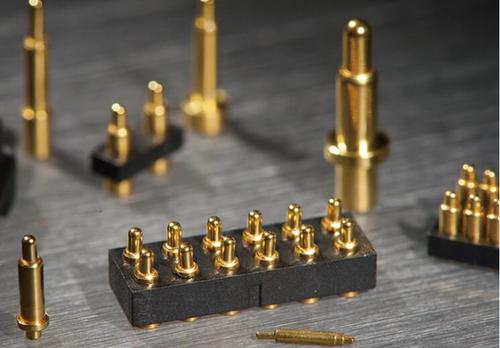
A mechanical equipment probe is a tactile or contact-based sensing device designed to inspect, measure, or align mechanical components and equipment—such as gears, bearings, shafts, molds, and machine tool parts. Unlike non-contact probes (e.g., laser probes), mechanical equipment probes use physical contact with the target to gather data, making them ideal for applications where surface texture, hardness, or mechanical alignment must be assessed directly. They are widely used in industries like automotive manufacturing, heavy machinery, tool and die making, and industrial maintenance, where mechanical precision ensures equipment safety, efficiency, and longevity.
The core design of a mechanical equipment probe includes a contact tip, a transduction mechanism, and a signal output module. The contact tip (made of wear-resistant materials like tungsten carbide, ruby, or ceramic) touches the target surface; its shape (e.g., spherical, conical, flat) is chosen based on the measurement task—spherical tips for general dimensioning, conical tips for measuring small holes or grooves. The transduction mechanism converts the mechanical displacement of the tip into an electrical signal: piezoelectric transducers generate a voltage when the tip is deflected, while strain gauge transducers measure changes in electrical resistance caused by tip movement. The signal output module amplifies and digitizes this signal, transmitting it to a measurement system (e.g., a coordinate measuring machine/CMM, a machine tool controller, or a handheld data logger) for analysis. For example, a mechanical probe on a CMM can measure the diameter of a gear tooth by moving the tip along the tooth’s profile and recording displacement data.
Key functionalities of mechanical equipment probes include dimensional measurement, geometric tolerance inspection, and alignment verification. In automotive manufacturing, a mechanical probe inspects the dimensions of engine blocks to ensure they meet design specifications—measuring bore diameters, surface flatness, and hole positions to ensure proper fit with pistons and other components. In heavy machinery maintenance, a probe checks the alignment of shafts and bearings in a turbine: misalignment can cause excessive vibration, leading to premature wear or equipment failure. In tool and die making, a probe verifies the accuracy of molds used to produce plastic parts, ensuring that the mold’s cavities match the part’s design exactly—preventing defects in mass-produced items.
Performance features of mechanical equipment probes focus on durability, precision, and adaptability. They offer high repeatability (±1–5 microns) and accuracy (±5–20 microns), ensuring consistent measurements even with repeated contact. The wear-resistant contact tips withstand thousands of measurements without degradation, reducing the need for frequent replacement. Many probes include overtravel protection—a mechanism that allows the tip to deflect beyond its measurement range without damaging internal components, critical in high-volume manufacturing where accidental collisions with the target can occur. Additionally, mechanical equipment probes are compatible with a range of environmental conditions: some models are sealed against dust and coolant (IP65 or IP67 ratings) for use in machine tool environments, while others are designed for high-temperature applications (up to 200°C) in foundries or heat treatment facilities.
Practical applications of mechanical equipment probes are integral to mechanical engineering and manufacturing. In machine tool setup, a mechanical probe aligns the workpiece with the cutting tool, ensuring that cuts are made in the correct position—reducing scrap and improving production efficiency. In bearing maintenance, a probe measures the clearance between a bearing’s inner and outer races: excessive clearance indicates wear, prompting replacement before the bearing fails. In mold making, a probe inspects the surface finish of a mold cavity, ensuring that the plastic parts produced have a smooth, defect-free surface. While mechanical equipment probes require periodic calibration to maintain accuracy (typically every 3–6 months), their ability to provide direct, reliable mechanical data makes them a staple in industries where physical contact measurement is essential. For any mechanical system requiring precise inspection or alignment, a mechanical equipment probe is a critical tool.
Read recommendations:
Magnetic PogoPin mass production
Material Analysis of PogoPin Probes
High temperature resistant Magnetic PogoPin for Charging Applications


159-2067-7287 Mr. Wan

0769-86006029

No. 5, Zhenrong Road, Wusha, Chang'an Town, Dongguan City
 Whatapp
CopyRight © 2024 Dongguan Yongtan New Energy Co., Ltd. All Rights Reserved


 CN
CN
 Home >