


Time:2025-12-20 Views:1 source:News
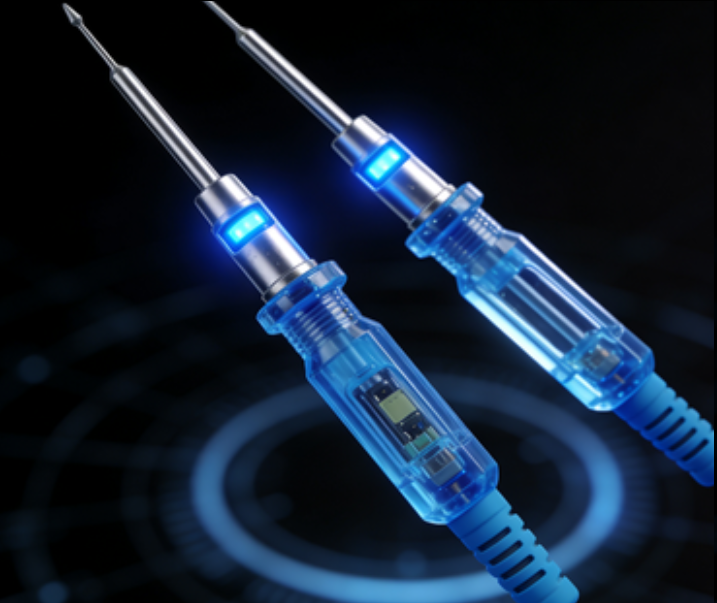
Electric meter probes (also called multimeter probes or electrical test probes) are essential accessories for electric meters—devices used to measure electrical properties like voltage, current, resistance, and continuity in electrical circuits. Unlike specialized probes (e.g., TV test probes), electric meter probes are general-purpose tools designed to work with a wide range of meters, including digital multimeters (DMMs), analog multimeters, and clamp meters. They serve as the physical interface between the meter and the circuit under test, transmitting electrical signals from the circuit to the meter for analysis. Electric meter probes are used by electricians, engineers, DIY enthusiasts, and maintenance professionals in applications ranging from household electrical repairs to industrial circuit testing. Their core role is to ensure accurate, safe measurements while protecting both the user and the meter from damage.
Key characteristics of electric meter probes that enable reliable electrical measurements include:
Conductive materials and tip designs: The probe’s tip (the part that contacts the circuit) is made of highly conductive materials to minimize signal loss—common options include copper (affordable and conductive), brass (durable), or gold-plated steel (resistant to corrosion and ideal for low-resistance measurements). Tip shapes vary based on the application: pointed tips (0.5mm-2mm in diameter) for precise contact with small component leads or solder points (e.g., in circuit boards), flat tips for measuring across large terminals (e.g., battery posts or wall outlets), and hook tips (curved to grip terminals) for hands-free measurements (useful when working alone). For high-current measurements (e.g., testing a car battery), some probes have thick, heavy-gauge tips to handle up to 10A-20A of current without overheating.
Insulation and safety ratings: To protect users from electric shock and prevent short-circuiting, the probe’s body (the part held by the user) is insulated with materials like PVC, rubber, or silicone—these materials have high dielectric strength (resistance to electrical breakdown) and are heat-resistant (up to 100°C-200°C for industrial probes). Probes are rated for specific voltage and current levels, which must match or exceed the circuit’s parameters: for example, a probe with a 1000V AC/DC rating and 10A current rating is safe for household circuits (120V/240V) but not for high-voltage industrial circuits (10,000V+). Safety certifications like IEC 61010 (international standard for electrical test equipment) ensure probes meet strict safety requirements, reducing the risk of electric shock or fire.
Cable design for signal integrity: The cable connecting the probe to the meter is a critical component—poor cable design can introduce noise or signal loss, leading to inaccurate measurements. High-quality probes use shielded cables (with a metal foil or braided shield around the inner conductor) to reduce electromagnetic interference (EMI) from nearby devices (e.g., motors, power lines). The cable’s length varies: short cables (30cm-50cm) minimize signal loss for high-frequency measurements, while longer cables (1m-2m) provide flexibility for testing hard-to-reach circuits (e.g., inside electrical panels). The cable’s conductor is made of stranded copper (for flexibility) with a gauge size appropriate for current capacity—thicker gauges (e.g., 16AWG) for high-current measurements, thinner gauges (e.g., 22AWG) for low-current, high-sensitivity measurements.
Compatibility with meters: Electric meter probes use standard connectors to attach to most meters—common connector types include banana plugs (4mm in diameter, the most universal), alligator clips (for temporary connections to wires), and spade terminals (for secure connections to screw terminals). Some probes have interchangeable tips or connectors, allowing users to switch between pointed tips (for circuit boards) and alligator clips (for wires) without replacing the entire probe. This versatility makes them suitable for a wide range of tasks, from testing a AA battery (using pointed tips) to checking a household outlet (using flat tips).
Common applications of electric meter probes:
Household electrical work: Electricians use probes to test wall outlets (measuring AC voltage to ensure it’s 120V/240V ±10%), check continuity in light switches (a low resistance reading indicates the switch is working), or troubleshoot faulty appliances (e.g., measuring the resistance of a toaster’s heating element—an infinite reading means the element is broken).
Automotive repair: Probes test car batteries (measuring DC voltage to check charge level—12.6V for a fully charged battery), alternators (checking if they’re outputting 13.5V-14.5V), or wiring harnesses (testing continuity to find broken wires).
Industrial maintenance: In factories, probes measure voltage in motor control circuits, test the resistance of sensors (e.g., temperature or pressure sensors), or check for current leaks in equipment—helping prevent downtime and ensure safe operation.
When using electric meter probes, follow safety guidelines: always disconnect power before testing high-voltage circuits, use the correct probe for the measurement type (e.g., current probes for current, voltage probes for voltage), and inspect probes for damage (cracked insulation or bent tips) before use. With their versatility and safety features, electric meter probes are a foundational tool for anyone working with electrical systems.
Read recommendations:
Fast manufacturer of magnetic connectors
Why do new energy vehicles at this stage use AC charging piles?


159-2067-7287 Mr. Wan

0769-86006029

No. 5, Zhenrong Road, Wusha, Chang'an Town, Dongguan City
 Whatapp
CopyRight © 2024 Dongguan Yongtan New Energy Co., Ltd. All Rights Reserved


 CN
CN
 Home >